生命科学

目前本页还没有简体中文版。您可以使用Google的翻译服务查阅 自动翻译。 我们不负责提供该项服务,而且翻译结果未经过我们的检查。
如果您需要更多帮助,请 联系我们

Raman is fast becoming a mainstream technique in the biosciences. Advances in imaging techniques such as StreamLine™ Plus, combined with chemometric data analysis capabilities, make it possible to gain an unprecedented understanding of chemical changes within biological materials, without the need for any sample preparation or dye markers.

网页内容下载致电当地的办事处 在线联系我们

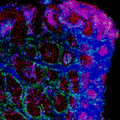
StreamLine image of oesophageal tissue

Raman spectroscopy has demonstrated the sensitivity to distinguish between cancerous, pre-cancerous and normal tissues, and its sensitivity to changes in cell metabolites and protein structures elevate it above competing spectroscopic techniques. Biological systems and materials provide unique challenges to Raman technology. Using Raman systems with Ultraviolet (UV) and Near Infrared (NIR) laser excitations allows the spectral region with the strongest fluorescence to be avoided. In addition to fluorescence, the majority of biological samples can be classified as weak Raman scatterers, with pigmented materials (such as vascular tissue) being strong absorbers of laser energy and thus more prone to laser damage. Renishaw has risen to these challenges by developing innovative techniques such as StreamLine™ Plus imaging to maximise the effectiveness of Raman in studying biological and biomedical materials.

StreamLine™ Plus chemical imaging is set to revolutionise spectroscopic analysis of biological materials. It allows biologists to take advantage of the superior chemical specificity and excellent spatial resolution associated with Raman spectroscopy to generate detailed chemical images at unprecedented speeds. In the image above, chemometric analysis of oesophageal tissue has identified that the concentration of glycogen is the primary differentiator between cells of differing maturity.

Documents for download

Selected publications

Characterization of microorganisms using UV Resonance Raman Spectroscopy and chemometrics (2004), E Consuelo Lopez-Diez. Analytical Chemistry, 76, 585-591

Evaluation of surface-enhanced resonance Raman scattering for quantitative DNA analysis (2004), K Faulds et al, Analytical Chemistry, 76, 412-417

Surface-enhanced Raman scattering for bacterial characterization using a scanning electron microscope with a Raman spectroscopy interface (2004), R Jarvis et al, Analytical Chemistry 76, 5198-5202

Spectroscopic study of human lung epithelial cells (A549) in culture: living cells versus dead cells (2003), I Notingher et al, Biospectroscopy, 72, 230-240

Near-infrared Raman spectroscopy for the classification of epithelial pre-cancers and cancers (2002), N Stone et al, Journal of Raman Spectroscopy, 33, 564-573

Direct Raman imaging techniques for study of the subcellular distribution of a drug (2002), J Ling et al, Applied Optics, 6006-6017

后续步骤

如果您需要了解更多信息或者询价, 或有其他要求,可以直接联系当地的雷尼绍办事处